EXW vs FOB vs CIF: China Shipping Terms Explained (2026)
March 31, 2026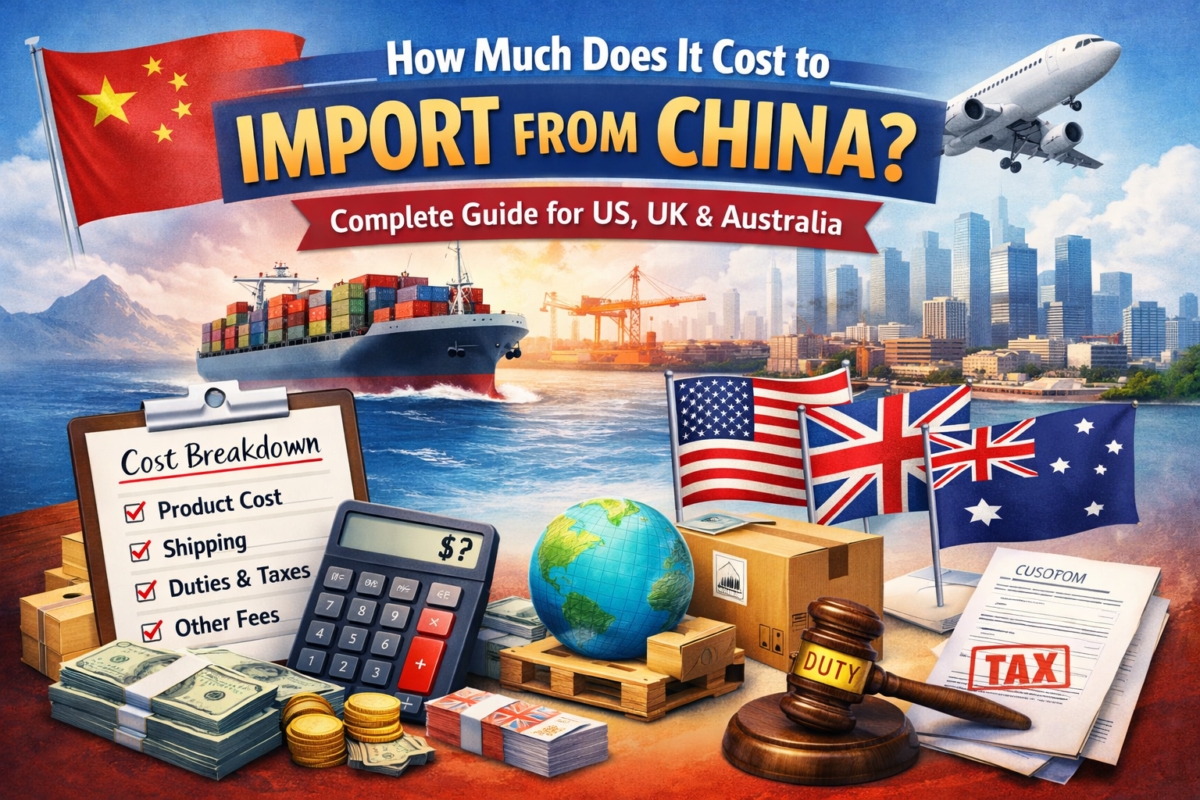
Importing from China is one of the most profitable business strategies today—but one of the biggest mistakes new importers make is underestimating the total cost.
The product price is just the beginning.
To truly understand your profit margins, you need to calculate the total landed cost—which includes shipping, duties, taxes, and hidden fees.
Why import costs are more than product price
The invoice from your supplier is only one part of the total spend. In most cases, your landed cost includes shipping, customs brokerage, port charges, import taxes, and sometimes inspections or quarantine fees.
A simple formula is:
Landed Cost = Product Cost + Shipping + Insurance + Duty + Tax + Clearance Fees + Local Delivery
In this guide, we’ll break down:
- Complete cost structure of importing from China
- Real examples for the US, UK, and Australia
- Practical insights to reduce costs
Main factors that affect cost
Several factors determine how much you pay to import from China. The biggest ones are shipping method, shipment size, product category, HS code classification, and destination country rules.
-
Shipping method: Air freight is faster but far more expensive than sea freight.
-
Shipment size: Full container loads usually cost less per unit than smaller shipments.
-
Product type: Some goods attract higher duties or stricter compliance checks.
-
Taxes and fees: VAT, GST, customs processing, and broker fees can add a significant amount
1. What Is the Total Cost of Importing from China?
When importing from China, your total cost typically includes:
1. Product Cost (EXW or FOB)
- The price quoted by the supplier
- Usually the largest portion of your cost
2. Shipping Cost
Depends on method:
- Sea Freight (Cheapest for bulk)
- Air Freight (Faster, more expensive)
- Courier (DHL/UPS/FedEx)
Example:
- Sea freight (20ft container): ~$900+
- Air freight: ~$4–$7 per kg
3. Customs Duties
- Based on HS code (product category)
- Typically ranges between 0%–25% globally
4. Taxes (VAT / GST / Sales Tax)
- Applied on product + shipping + duty
- Varies by country
5. Customs Clearance & Handling Fees
- Documentation
- Port handling
- Broker fees
6. Miscellaneous Costs
- Inspection (QC)
- Warehousing
- Last-mile delivery
2. The Formula to Calculate Import Cost
A standard formula used globally:
Total Landed Cost = Product Cost + Shipping + Duty + Taxes + Fees
Example:
- Product Cost: $2,000
- Shipping: $300
- Duty: 5%
- Tax: 20%
Total import cost becomes ~$2,898
3. Cost Breakdown by Country
🇺🇸 Importing from China to the United States
For the US, the cost of importing usually includes product value, ocean or air freight, customs duty, brokerage fees, and applicable federal charges. A recent guide notes that landed costs for China imports can run about 25% to 40% above the invoice price, depending on category and shipping method.
Typical US cost components
-
Product cost: What you pay the supplier.
-
Freight: Ocean freight is usually cheaper; air freight can be much higher.
-
Insurance: Often around 0.5% to 1% of goods value.
-
Duty: Depends on the HS code and can vary widely.
-
Customs fees: Broker charges and entry fees also apply
Key Costs:
- Import Duty: 0% – 25% depending on product
- Sales Tax: Varies by state
- De Minimis Threshold: $800 (duty-free imports below this)
Key Insight:
- The US is one of the cheapest countries to import into
- No VAT makes it attractive for eCommerce and Amazon sellers
Example:
For a $1,000 shipment:
- Duty: 5–15% typical
- Sales tax: 0–10%
Total extra cost: ~10%–25%
🇬🇧 Importing from China to the United Kingdom
Importing into the UK usually involves product cost, freight, customs duty, VAT, and customs clearance charges. A UK business guide notes that air freight is faster but can cost over $1,000 per cubic metre, while sea freight is typically much cheaper for bulk shipments.
Typical UK cost components
-
Product cost: Supplier invoice price.
-
Freight: Sea freight for cheaper bulk transport, air freight for speed.
-
Customs duty: Depends on product classification and origin.
-
VAT: Commonly applies to the import value and related charges.
-
Brokerage and handling: Clearance and terminal fees can add more cost.
Key Costs:
- Import Duty: 0% – 20%
- VAT: 20% (applies on goods + shipping + duty)
- Threshold: £135
Example:
- Goods: £15,000
- Shipping: £7,000
- Duty: 4.5%
Total duty: £990
VAT applied on total value (~£22,990)
Key Insight:
- UK imports are heavily impacted by VAT
- Cash flow planning is critical
🇦🇺 Importing from China to Australia
Australia has its own customs duties, GST, and import processing charges, and sea freight is usually the most common option for larger shipments. A recent Australian guide estimates sea freight from China at about $900 for a 20-foot container, while LCL can cost about $18 to $38 per cubic metre, and air freight is around $4 to $7 per kilogram.
Typical Australia cost components
-
Customs duty: May apply depending on product category.
-
GST: Commonly 10% on the taxable import value.
-
Freight: Sea freight or air freight depending on urgency.
-
Port and handling charges: These can be a major part of the total.
-
Import processing charge: Fixed fee based on shipment value and declaration method.
Key Costs:
- Import Duty: ~5% standard
- GST: 10%
- Threshold: AUD $1,000
Shipping Example:
- Sea freight: $18–$38 per CBM
- Air freight: $4–$7 per kg
Key Insight:
- Australia has predictable and relatively low duty structure
- Ideal for bulk imports
4. Hidden Costs Most Importers Ignore
Many importers only calculate product + shipping and forget:
Commonly Missed Costs:
- Port charges
- Customs broker fees
- Storage/demurrage
- Quality inspection costs
- Currency conversion losses
These can add 5%–15% extra to your total cost
5. Real Cost Range: What Should You Expect?
Across most countries:
Total import cost =
Product Cost + 20% to 60% extra
- Low-duty products: +15%–25%
- High-duty categories (textiles, electronics): +30%–60%
6. Factors That Affect Import Cost
1. Product Type (HS Code)
- Biggest impact on duty rates
2. Shipping Method
Shipping is often the second-largest cost component, and it varies significantly depending on method:
🚢 Sea Freight (Best for Bulk Orders)
- Cheapest option per unit
- Ideal for large shipments
- Transit time: 20–40 days
Typical Cost:
- $80–$150 per CBM (varies by route and season)
✈️ Air Freight (Faster but Expensive)
- Suitable for small, high-value goods
- Transit time: 5–10 days
Typical Cost:
- $4–$8 per kg
📦 Express Courier (DHL, UPS, FedEx)
- Best for samples or small urgent shipments
- Door-to-door delivery
This is the most expensive option
Key Insight:
Choosing the right shipping method can dramatically impact your profit margins.
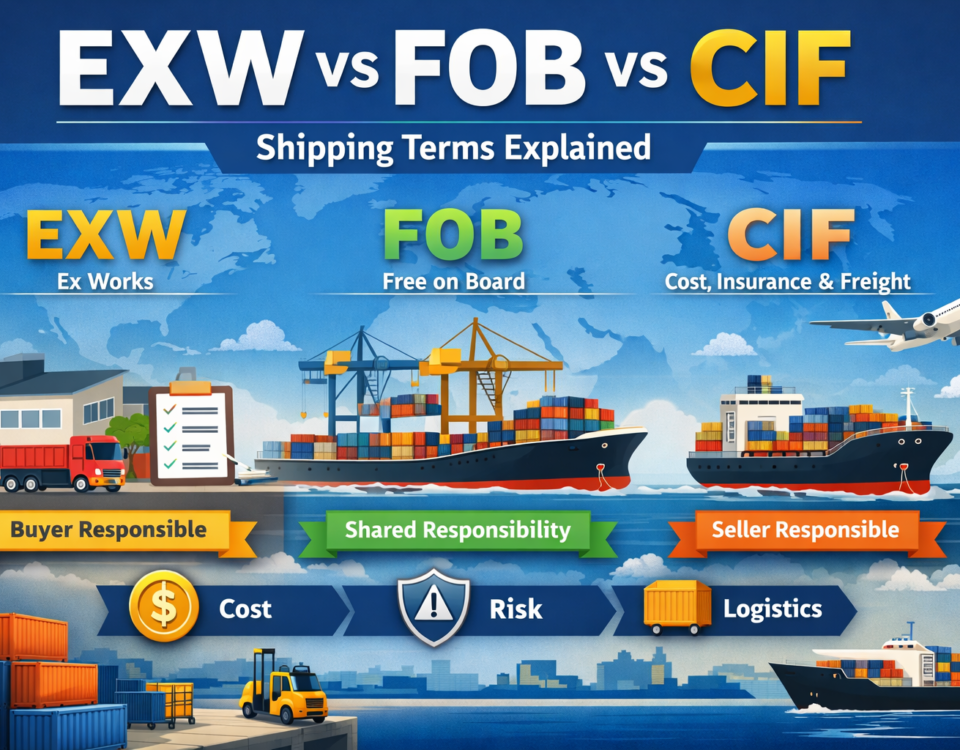
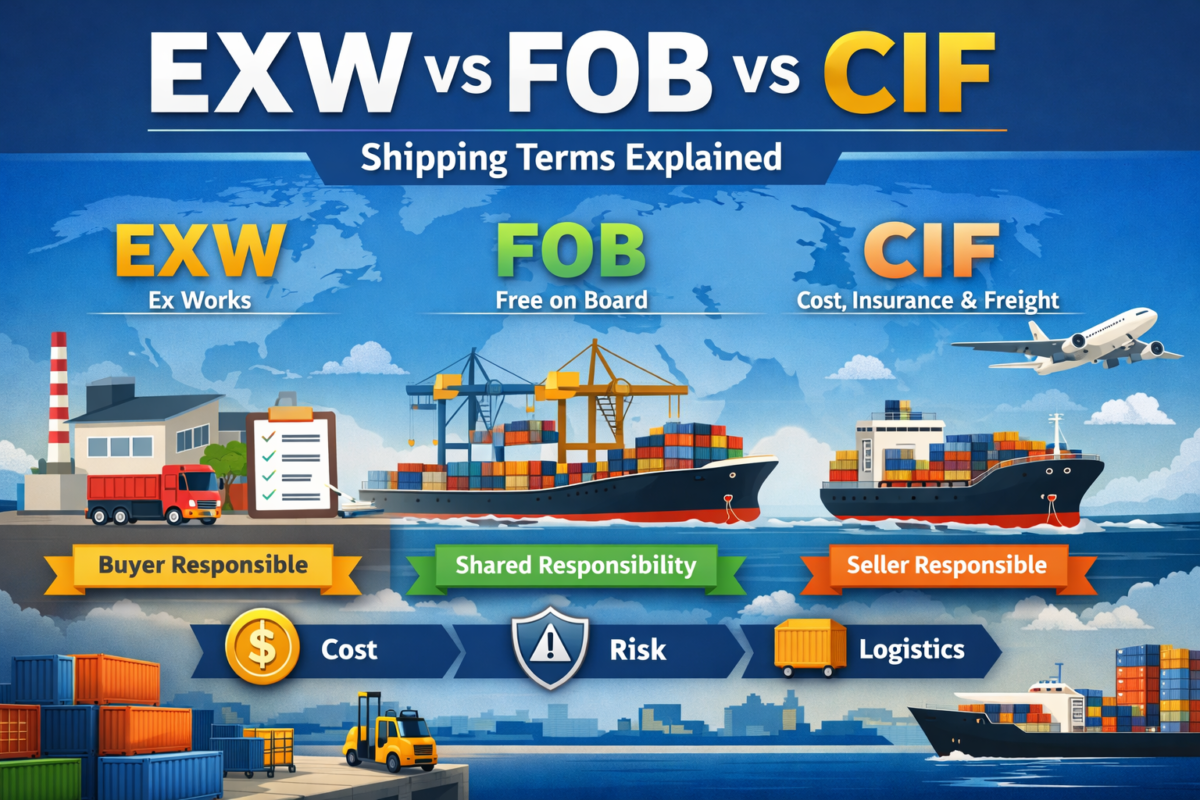
3. Incoterms (FOB vs CIF vs DDP)
- FOB gives more cost control
- DDP may hide inflated charges
4. Shipment Size
- Larger shipments reduce per-unit cost
5. Country Regulations
- VAT-heavy regions (UK/EU) cost more
7. How to Reduce Import Costs
✔ Optimize HS Code Classification
Incorrect classification can increase duty
✔ Use FOB Instead of DDP
Better transparency and cost control
✔ Consolidate Shipments
Reduce per-unit freight cost
✔ Work With a Sourcing Partner
Helps in:
- Supplier negotiation
- Cost optimization
- Compliance
✔ Plan for Bulk Orders
Economies of scale matter
8. How to calculate landed cost
The safest way to estimate your true import cost is to work backward from the full landed cost formula. Start with the product price, then add international shipping, insurance, duty, taxes, broker fees, and last-mile delivery.
Simple calculation steps
-
Get the supplier quote.
-
Identify the correct HS code.
-
Request shipping rates for sea and air.
-
Estimate duty and taxes for your destination.
-
Add customs clearance and local delivery costs.
Sample formula
Landed Cost = FOB Price + Freight + Insurance + Duty + Tax + Local Fees.
9. Final Thoughts
Importing from China is still one of the most profitable global trade models—but only if you understand the true cost structure.
Key takeaway:
- US: Lowest import cost (no VAT)
- UK: Higher cost due to VAT (20%)
- Australia: Balanced and predictable
If you properly calculate your landed cost, you can:
- Price competitively
- Protect margins
- Scale confidently