How to Import Products from China: Complete Beginner Guide (2026)
March 10, 2026
Alibaba vs 1688 vs Made-in-China: Which Platform Is Best for Sourcing from China?
March 17, 2026How to Find Reliable Manufacturers in China (Complete Guide 2026)
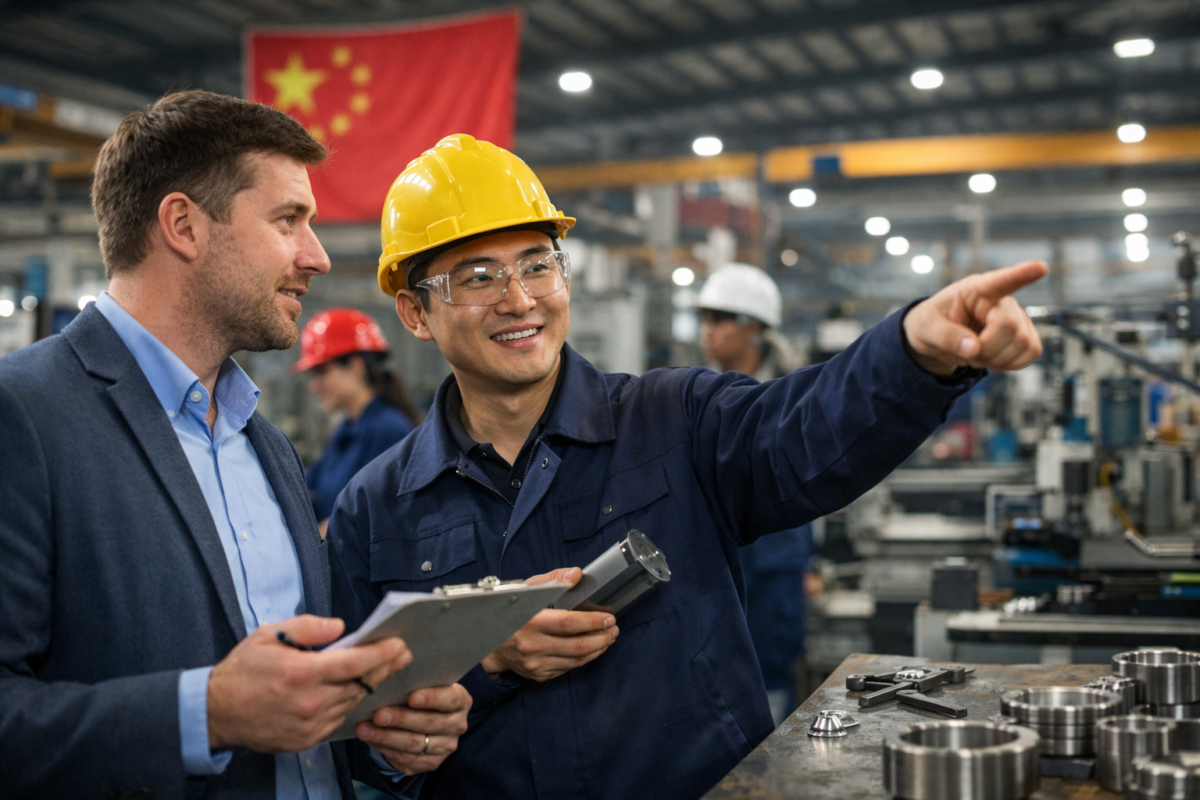
How to Find Reliable Manufacturers in China (Complete Guide 2026)
China has been the world’s manufacturing powerhouse for more than three decades. From consumer electronics and home goods to fashion accessories and industrial components, a significant portion of the world’s products are manufactured in Chinese factories.
For entrepreneurs, importers, and private-label brands, China offers enormous advantages: competitive pricing, scalable production capacity, and a mature supply chain ecosystem.
However, finding reliable manufacturers in China is not always straightforward.
Many buyers begin their sourcing journey with online platforms like Alibaba or Global Sources, only to discover later that the “manufacturer” they selected is actually a trading company. Others encounter communication issues, production delays, quality problems, or suppliers that simply disappear when complications arise.
The difference between a successful sourcing project and a costly mistake often comes down to one factor:
Choosing the right manufacturer and managing the sourcing process correctly.
In this guide, we will explain in detail:
-
How to identify reliable manufacturers in China
-
Common pitfalls when sourcing from China
-
How to verify factories before production
-
Why many online suppliers are traders posing as manufacturers
-
How a professional sourcing agent or sourcing company can help protect your interests
Whether you are launching a new product or scaling your existing business, this guide will help you build a reliable supply chain in China.
Why China Remains the Global Manufacturing Hub
Before discussing how to find reliable manufacturers, it is important to understand why China remains the preferred sourcing destination for businesses worldwide.
China’s manufacturing ecosystem offers several advantages:
1. Massive Industrial Clusters
China’s manufacturing industry is organized into specialized industrial clusters. For example:
-
Shenzhen – electronics manufacturing
-
Yiwu – small commodities and accessories
-
Dongguan – consumer products and hardware
-
Guangzhou – fashion and beauty products
-
Zhejiang – home goods and textiles
These clusters create a highly efficient ecosystem where suppliers, raw material vendors, packaging providers, and logistics companies operate within the same region.
2. Scalable Production Capacity
Chinese factories are capable of producing small private label batches as well as massive industrial volumes. This flexibility allows startups and large companies alike to source products from China.
3. Competitive Pricing
Due to economies of scale and optimized supply chains, Chinese manufacturers can often produce goods at significantly lower costs compared to Western markets.
However, while China offers enormous advantages, sourcing success depends heavily on working with reliable manufacturers.
The Biggest Challenge: Finding the Right Manufacturer
When buyers first begin sourcing from China, they often assume that online platforms will directly connect them with factories.
Unfortunately, this is not always the case.
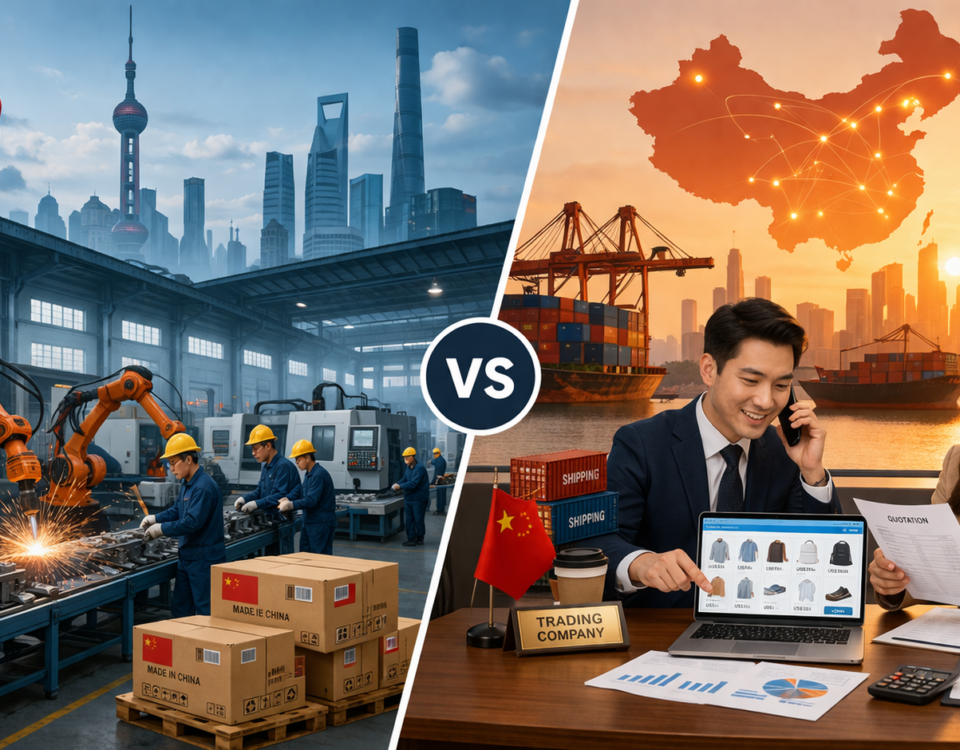
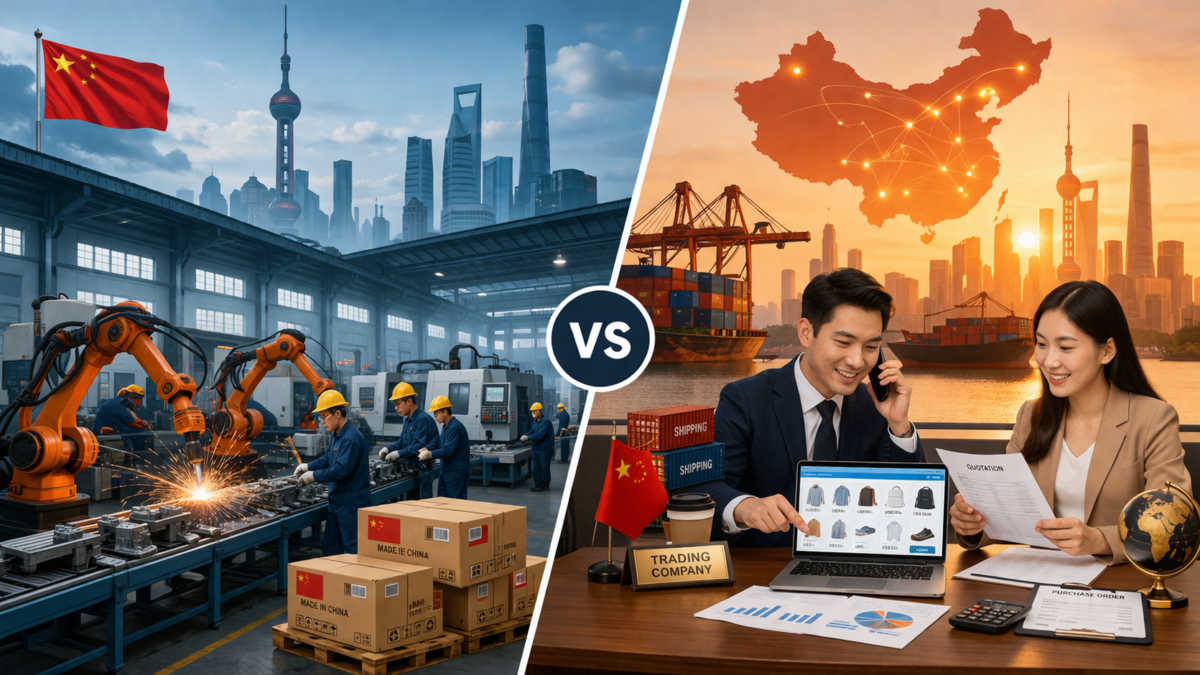
Many suppliers on B2B marketplaces are trading companies posing as manufacturers.
A trading company typically does not own a factory. Instead, it purchases products from various factories and resells them to international buyers.
This creates several risks.
Limited Production Control
Because trading companies do not operate the factory themselves, they have limited control over:
-
Production scheduling
-
Quality control
-
Raw material sourcing
If something goes wrong during production, the trading company must negotiate with the factory, which can cause delays and miscommunication.
Higher Pricing
Trading companies add their own margins to the factory price. As a result, buyers often pay more than necessary.
Communication Gaps
When the buyer communicates with a trader rather than the factory directly, information may pass through multiple layers, increasing the risk of misunderstandings.
Supplier Disappearance
One of the most frustrating scenarios buyers encounter is when a supplier becomes unresponsive during production delays or quality issues.
Since some trading companies rely on multiple factories, they may struggle to resolve problems quickly.
In extreme cases, the “manufacturer” may disappear for extended periods, leaving buyers with uncertain production timelines and unresolved issues.
Where Most Buyers Search for Manufacturers
Most international buyers begin their sourcing process using B2B platforms such as:
-
Alibaba
-
Global Sources
-
Made-in-China
These platforms provide access to thousands of suppliers across many industries.
While they are useful for initial research, they also contain a mix of:
-
Actual manufacturers
-
Trading companies
-
Agents
-
Resellers
This makes it difficult for new buyers to identify legitimate factories.
Therefore, proper supplier verification is essential.
How to Identify a Real Manufacturer in China
When evaluating suppliers, there are several indicators that help determine whether a company is an actual factory.
1. Factory Audit Reports
Reliable manufacturers can provide third-party factory audit reports from companies such as:
-
SGS
-
TÜV
-
Bureau Veritas
These reports verify that the company operates a manufacturing facility.
2. Production Capabilities
Ask detailed questions about:
-
Production lines
-
Machinery
-
Monthly production capacity
-
Number of workers
A genuine factory can answer these questions clearly.
3. Factory Photos and Videos
Real manufacturers can provide photos and videos showing:
-
Production lines
-
Raw material storage
-
Assembly processes
-
Quality control areas
However, buyers should be cautious because some traders reuse factory images.
4. Business License Verification
Chinese companies operate under registered business licenses.
The business scope listed on the license often indicates whether the company is a manufacturer or trading company.
5. Factory Visit
The most reliable way to confirm a supplier is through a physical factory visit.
Seeing the facility in person allows buyers to evaluate:
-
Production capacity
-
Quality control processes
-
Working conditions
-
Equipment and machinery
However, many international buyers cannot travel to China frequently.
This is where sourcing companies become extremely valuable.
The Role of a Sourcing Agent in China
A professional China sourcing agent or sourcing company acts as a local partner that helps international buyers navigate the complexities of sourcing from China.
Instead of relying solely on online suppliers, sourcing agents conduct on-ground verification and supply chain management.
Their services usually include:
-
Supplier identification
-
Factory verification
-
Price negotiation
-
Production monitoring
-
Quality inspection
-
Logistics coordination
By having a trusted local partner, buyers can significantly reduce risks associated with overseas manufacturing.
How Sourcing Companies Verify Factories Before Production
One of the most important steps in sourcing is pre-production verification.
A sourcing company typically conducts a factory visit before production begins to ensure that the supplier is capable of fulfilling the order.
During this visit, the sourcing team evaluates several factors.
Factory Infrastructure
They check whether the factory actually owns the equipment required for production.
For example, if a buyer wants to manufacture metal hardware, the factory should have:
-
CNC machines
-
Molding equipment
-
Surface treatment lines
If these are missing, it indicates the factory may outsource production.
Quality Control Systems
The sourcing team reviews how the factory manages quality control.
Reliable factories usually have structured quality systems including:
-
Incoming material inspections
-
In-process quality checks
-
Final product inspections
Production Capacity
The team verifies whether the factory has sufficient capacity to meet production deadlines.
This helps avoid situations where factories accept orders they cannot realistically complete on time.
Compliance Standards
Depending on the product category, factories may require certifications such as:
-
ISO quality standards
-
CE compliance
-
FDA or food safety certifications
Sourcing companies verify these certifications to ensure compliance with the buyer’s market requirements.
Managing Production After Orders Are Placed
Once production begins, the sourcing company continues to monitor progress.
This ongoing oversight is crucial for preventing delays and quality issues.
Production Monitoring
Sourcing teams stay in constant communication with the factory to track production schedules.
If delays occur, they investigate the cause and work with the factory to resolve the issue.
Quality Inspections
During production, inspections may be conducted to ensure products meet specifications.
These inspections may include:
-
Random product checks
-
Functional testing
-
Packaging verification
Problem Resolution
If a problem arises—such as defective materials or production errors—the sourcing company works with the factory to implement corrective actions.
This proactive approach prevents small issues from becoming major problems.
Handling Production Delays and Factory Issues
Manufacturing projects sometimes encounter unexpected challenges such as:
-
Raw material shortages
-
Machinery breakdowns
-
Labor shortages during peak seasons
When buyers deal directly with unfamiliar suppliers, resolving these issues can be difficult.
Communication gaps, time zone differences, and language barriers often slow down the process.
A sourcing company plays an important role here.
Because they are located in China, they can:
-
Visit the factory to assess the situation
-
Communicate directly with management
-
Develop solutions to resolve production bottlenecks
Instead of waiting for delayed email responses, the sourcing team can actively manage the situation on the ground.
This significantly improves the chances of keeping production on schedule.
Additional Benefits of Working with a Sourcing Company
Beyond factory verification and production monitoring, sourcing companies offer several additional advantages.
Supplier Network
Experienced sourcing companies maintain large networks of verified factories across multiple industries.
This allows them to quickly identify suitable manufacturers for different product categories.
Price Negotiation
Because sourcing agents understand local pricing structures, they can negotiate competitive prices while ensuring quality standards are maintained.
Language and Cultural Bridge
Communication between international buyers and Chinese factories can sometimes be challenging.
Sourcing agents act as a bridge, ensuring that technical requirements and product specifications are clearly understood.
Logistics and Export Support
Many sourcing companies also assist with shipping coordination, export documentation, and customs procedures.
This simplifies the entire import process for buyers.
Best Practices for Finding Reliable Manufacturers in China
Whether you work with a sourcing agent or source independently, the following best practices can improve your chances of success.
Conduct Thorough Supplier Research
Never rely on a single supplier. Compare multiple factories before making a decision.
Request Samples
Product samples allow buyers to evaluate quality before committing to large orders.
Start with Smaller Orders
Initial orders should be relatively small to test the supplier’s reliability.
Use Contracts and Specifications
Detailed purchase agreements and product specifications reduce misunderstandings.
Perform Quality Inspections
Independent inspections before shipment help ensure products meet quality standards.
Conclusion
Sourcing products from China can offer tremendous opportunities for businesses looking to build competitive product lines and scalable supply chains.
However, success depends on finding reliable manufacturers and managing the sourcing process carefully.
Online B2B platforms can be useful starting points, but they often include trading companies posing as manufacturers. Without proper verification, buyers risk encountering production delays, quality issues, and unreliable suppliers.
This is why many international buyers choose to work with professional sourcing companies in China.
By conducting factory visits, verifying production capabilities, monitoring manufacturing progress, and resolving issues on the ground, sourcing agents provide an extra layer of protection for buyers.
For businesses that want to build long-term supply chains in China, partnering with a trusted sourcing company can save time, reduce risk, and ensure that production runs smoothly.
If you are looking to source products from China and want assistance identifying reliable manufacturers, working with an experienced sourcing partner can help you navigate the complexities of the Chinese manufacturing landscape with confidence.
Feel free to get in touch with us today to know more details .