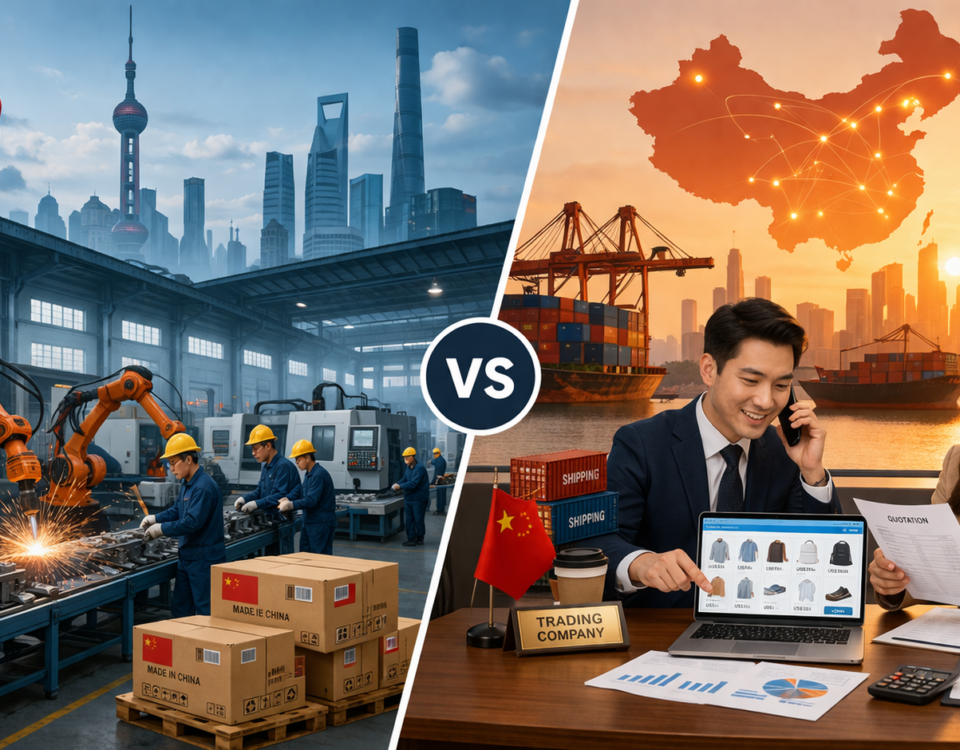

China Sourcing Company vs Direct Factory Sourcing
December 23, 2025
Beauty Products Sourcing from China: Unlocking Global Opportunities
January 13, 2026
For overseas buyers, China remains the world’s most powerful manufacturing ecosystem—but also one of the most misunderstood. Many buyers believe cost savings come purely from “cheaper labor” or aggressive factory bargaining. In reality, the biggest cost reductions without quality sacrifice come from systematic sourcing intelligence, not price pressure.
This is where a China sourcing agent becomes a strategic asset rather than a middleman.
A professional sourcing agent does not simply “find factories.” Instead, they engineer cost efficiency across suppliers, materials, processes, packaging, and logistics—while protecting quality standards and brand risk.
This deep-dive guide explains how China sourcing agents reduce costs without compromising quality, using real sourcing mechanics such as:
-
Supplier benchmarking (beyond Alibaba listings)
-
Cost-driver analysis at component and process level
-
MOQ negotiation frameworks that protect cash flow
-
Packaging, material, and production-process optimization
-
Risk and quality control embedded into cost decisions
If you are a brand owner, Amazon seller, importer, or B2B buyer, this article will change how you evaluate sourcing costs—and why the cheapest quote is often the most expensive mistake.
1. Why “Cheapest Factory” Is the Wrong Starting Point
Many buyers begin sourcing by asking one question:
“Who can give me the lowest unit price?”
This approach fails for three reasons:
-
Unit price ignores hidden costs
Rework, rejects, shipment delays, compliance failures, and recalls can erase any apparent savings. -
Factories optimize for their margin, not your brand
Without oversight, factories reduce cost by lowering material grade, skipping steps, or switching components. -
Price-only sourcing creates supplier dependency risk
A factory that wins business on razor-thin margins will cut corners under pressure—or abandon your order when larger buyers appear.
A China sourcing agent reframes the question:
“Where can total landed cost be reduced without increasing quality risk?”
That distinction is everything.
2. Supplier Benchmarking: The Core Advantage of a China Sourcing Agent
What Supplier Benchmarking Really Means
Supplier benchmarking is not comparing three quotes from the same industrial cluster.
A professional China sourcing agent benchmarks suppliers across:
-
Geographic manufacturing clusters
-
Ownership models (factory-owned vs trader-owned)
-
Capacity tiers (small OEM vs export-scale plants)
-
Technology levels
-
Quality systems maturity
-
Cost structure transparency
For example:
-
A Zhejiang factory may quote cheaper labor
-
A Guangdong factory may offer better automation
-
A Shandong factory may deliver superior raw material sourcing
Without local insight, buyers never see these trade-offs.
How Benchmarking Reduces Cost Without Risk
A sourcing agent creates supplier matrices such as:
| Dimension | Supplier A | Supplier B | Supplier C |
|---|---|---|---|
| Raw material source | Trader | Direct mill | Mixed |
| Automation level | Low | High | Medium |
| Scrap rate | 6–8% | 2–3% | 4–5% |
| Lead-time stability | Medium | High | Medium |
| MOQ flexibility | Low | Medium | High |
| Compliance readiness | Weak | Strong | Medium |
The lowest quote rarely wins when total cost is considered.
Instead, the sourcing agent selects the supplier that:
-
Minimizes variance
-
Reduces failure risk
-
Enables scalable cost reductions over time
This is how cost reduction becomes repeatable, not accidental.
3. Cost-Driver Analysis: Where Real Savings Actually Come From
Why Cost-Driver Analysis Matters
Most buyers only see ex-factory price.
A China sourcing agent sees cost anatomy.
Every manufactured product has hidden cost drivers:
-
Raw materials
-
Yield loss
-
Labor hours
-
Tooling amortization
-
Energy consumption
-
Quality inspection
-
Packaging and handling
-
Inventory carrying cost
Reducing one of these intelligently often saves more than squeezing unit price.
Example: Breaking Down a Product Cost
Let’s say a product costs USD 5.00 per unit.
A sourcing agent may break it down like this:
| Cost Element | % of Cost |
|---|---|
| Raw material | 42% |
| Labor | 18% |
| Overhead | 15% |
| Packaging | 10% |
| Scrap & rework | 8% |
| Margin | 7% |
Instead of negotiating price blindly, the agent asks:
-
Can raw material be sourced from a tier-2 mill instead of tier-1?
-
Can design changes reduce scrap from 8% to 4%?
-
Can semi-automation cut labor hours without affecting tolerances?
-
Is packaging over-engineered for the target market?
Each adjustment protects quality while reducing cost structurally.
4. MOQ Negotiation Strategies That Actually Work
Why Factories Push High MOQs
Factories enforce MOQs not to bully buyers—but to protect:
-
Machine setup efficiency
-
Raw material batch economics
-
Production scheduling
-
Cash flow stability
A sourcing agent understands what part of the MOQ is negotiable—and what is not.
Smart MOQ Reduction Techniques Used by Sourcing Agents
1. Component-Level MOQ Splitting
Instead of reducing total MOQ, the agent negotiates:
-
Shared raw material batches
-
Color or variant flexibility
-
Mixed SKU production runs
2. Staged MOQ Commitments
The buyer commits to:
-
Trial order (lower MOQ)
-
Confirmed reorder within 60–90 days
This reassures factories without upfront risk.
3. Tooling Cost Reallocation
Instead of embedding tooling into MOQ:
-
Buyer pays tooling separately
-
Factory lowers MOQ requirement
4. Capacity Backfill Strategy
Agents place orders during:
-
Off-peak production windows
-
Factory slack periods
This lowers MOQ resistance without sacrificing priority.
Result: Lower Cash Risk Without Quality Dilution
The key insight:
MOQ reduction is a commercial negotiation, not a price war.
A China sourcing agent translates buyer intent into factory logic.
5. Packaging Optimization: The Most Overlooked Cost Lever
Packaging is often 10–30% of product cost—yet buyers rarely question it.
Common Packaging Cost Traps
-
Over-thick corrugated cartons
-
Excessive inner packaging
-
Unnecessary lamination or coatings
-
Non-standard box sizes
-
Redundant inserts
Factories default to “safe” packaging—not optimized packaging.
How a Sourcing Agent Optimizes Packaging
A sourcing agent evaluates packaging across four dimensions:
1. Structural Engineering
-
Drop-test requirements
-
Compression strength vs weight
-
Pallet stacking optimization
2. Material Substitution
-
Kraft vs coated board
-
Recycled blends
-
GSM optimization
3. Logistics Efficiency
-
Carton dimension optimization
-
Container utilization improvement
-
Reduced CBM per unit
4. Market-Specific Needs
-
Retail vs e-commerce
-
Amazon FBA vs bulk B2B
-
Compliance labeling requirements
Real Impact
A 12% packaging cost reduction often translates into:
-
Lower shipping cost
-
Less damage rate
-
Higher container efficiency
All achieved without touching product quality.
6. Material & Process Optimization Without Quality Loss
Material Optimization Is Not Downgrading
A professional sourcing agent never says:
“Use cheaper material.”
Instead, they ask:
“Is this material over-specified for its functional requirement?”
Examples of Smart Material Optimization
-
Switching from virgin plastic to controlled recycled blends
-
Adjusting alloy composition within tolerance range
-
Using multi-layer composites instead of single expensive substrates
-
Replacing cosmetic finishes without affecting performance
Each change is:
-
Tested
-
Documented
-
Approved before scaling
Process Optimization: Where Factories Save Money Quietly
Process improvements often reduce cost and improve quality:
-
Better jig design reduces human error
-
Automation reduces variability
-
Inline QC reduces rework
-
Process sequencing reduces handling damage
A sourcing agent identifies factories that invest in process maturity, not shortcuts.
7. Quality Control as a Cost Reduction Tool (Not a Cost Center)
This is the most misunderstood concept.
Many buyers view QC as an added cost.
In reality, QC reduces total cost dramatically by preventing:
-
Rework
-
Shipment delays
-
Returns
-
Legal exposure
-
Brand damage
How Sourcing Agents Integrate QC into Cost Strategy
-
Supplier pre-qualification audits
-
First article inspections
-
In-process checks
-
Pre-shipment inspections
-
Root-cause analysis on defects
Instead of “inspect and reject,” the agent builds feedback loops that reduce defect rates over time.
Lower defect rates = lower cost per sellable unit.
8. Total Landed Cost Thinking: The Agent’s Real Value
A China sourcing agent optimizes total landed cost, not just ex-factory price.
This includes:
-
Unit price
-
Packaging
-
Logistics efficiency
-
Compliance risk
-
Inventory velocity
-
Cash-flow impact
-
Scalability
Two suppliers may differ by USD 0.20/unit—but one saves USD 2.00/unit downstream.
Only an agent with end-to-end visibility can see that.
9. Why Buyers Who Skip Sourcing Agents Eventually Pay More
Experienced buyers eventually learn:
-
Cheap factories become expensive suppliers
-
Unmanaged quality becomes brand liability
-
MOQ rigidity blocks growth
-
Cost savings without systems are temporary
A China sourcing agent builds repeatable, scalable cost efficiency.
10. When a China Sourcing Agent Is Most Valuable
You benefit most from a sourcing agent if you are:
-
Scaling private-label brands
-
Managing multi-SKU portfolios
-
Entering new product categories
-
Balancing cost pressure with brand reputation
-
Sourcing across multiple factories
-
Selling in regulated markets (US, EU, UK)
Final Thought: Cost Reduction Is a System, Not a Negotiation
The biggest misconception in China sourcing is that cost reduction equals price pressure.
In reality:
Sustainable cost reduction comes from supplier intelligence, engineering insight, and operational discipline.
A professional China sourcing agent delivers exactly that—lower cost, protected quality, and reduced risk.
If you want your sourcing strategy to work this year and five years from now, build it on systems—not shortcuts.