
70% of Importers Make This Costly Mistake When Sourcing Products From China
September 12, 2025
FOB vs CIF vs DDP: Which Shipping Term is Best for Importers?
October 9, 2025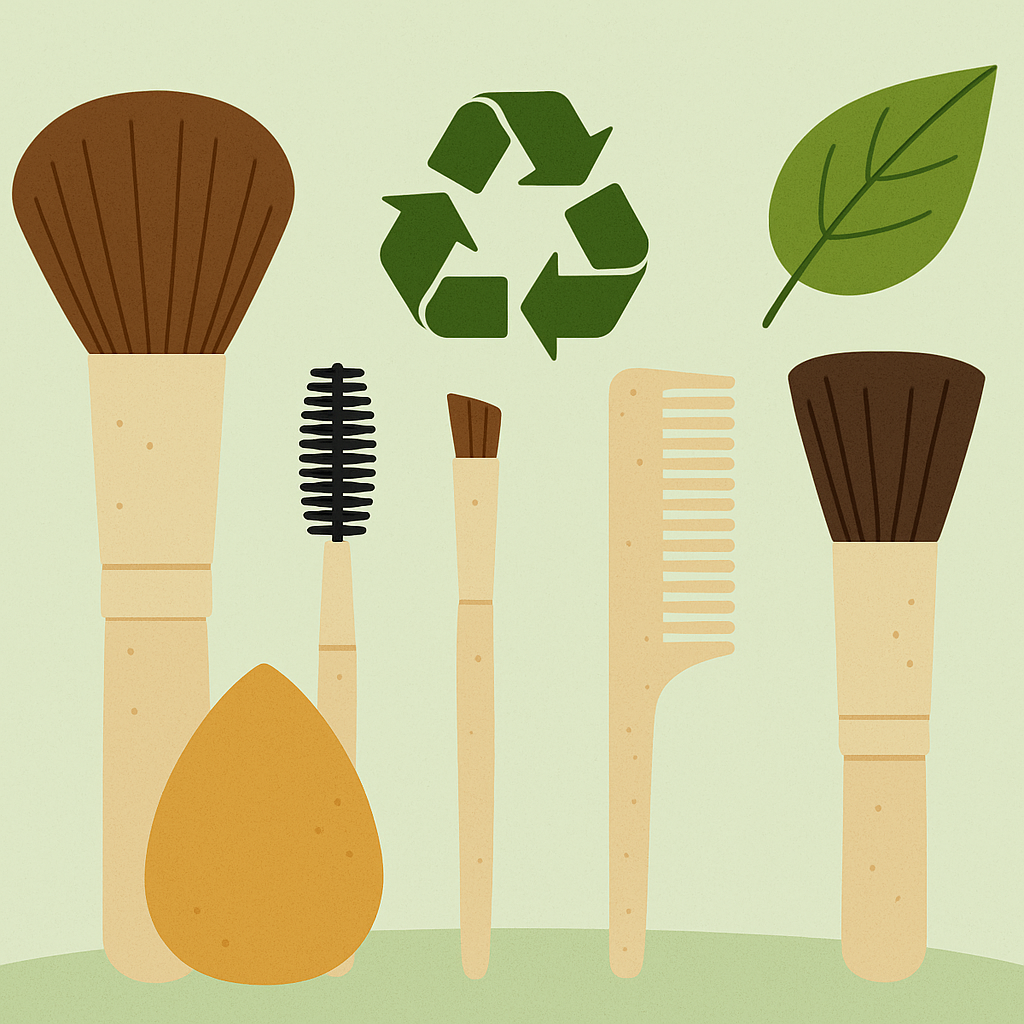
In beauty tool sourcing, “non-compliant eco-friendly materials,” “difficulties in implementing customization,” and “opaque production processes” are the three most common pitfalls for overseas clients. With 8 years of experience in China’s beauty supply chain and having served over 300 cross-border beauty brands, we will clarify the core logic of sourcing beauty tools from China from three dimensions—identification of eco-friendly materials, breakdown of customized processes, and key quality control checkpoints—to help you avoid hidden traps.
- Avoiding Pitfalls in Eco-Friendly Materials: Don’t Be Misled by “Fake Eco-Friendly” Labels
Today, “eco-friendly requirements” for beauty tools in European and American markets have shifted from “value-added features” to “entry thresholds.” The EU’s Single-Use Plastics Directive (SUPD) explicitly prohibits the import of non-degradable beauty tools, and California in the US requires that all beauty tool packaging contain at least 30% recycled materials starting from 2025. However, many suppliers use “eco-friendly rhetoric” to cover up low-quality materials—for example, “recyclable” does not equal “degradable,” and “plant-based” may only contain 10% plant-derived components.
First, Distinguish: “Certification Standards” and “Application Scenarios” of Mainstream Eco-Friendly Materials
The choice of eco-friendly materials varies greatly among different beauty tools (makeup brushes, puffs, storage boxes). Choosing the wrong material will not only lead to compliance failures but also affect user experience. We have compiled the certifications and application scenarios for high-frequency sourcing materials—you can directly use this as a benchmark:
| Beauty Tool Type | Mainstream Eco-Friendly Materials | Mandatory Certifications | Target Markets | Notes |
| Makeup Brush Handles | PLA degradable plastic, bamboo, maple wood | EU ECOCERT, US BPI | Europe, America, Australia | For PLA handles, confirm the “degradation conditions” (industrial composting vs. home composting) to avoid labeling products as “degradable” when they require special environments to decompose. |
| Makeup Brush Bristles | Recycled nylon (PCR Nylon), plant fiber bristles | GRS (Global Recycled Standard), OEKO-TEX® | Global high-end beauty markets | Recycled nylon bristles require a “recycled material ratio report” (at least 50% recycled content to meet GRS standards) to avoid using “fake recycled bristles” as substitutes. |
| Puffs/Sponges | Degradable konjac sponges, recycled polyurethane (rPU) | EU OK Compost, US FDA Food Contact Certification | EU, North America | Konjac sponges need to be tested for “humidity resistance” (whether they mold after repeated soaking); rPU puffs must be confirmed to have no formaldehyde emissions. |
| Packaging Boxes | Recycled cardboard, sugarcane pulp paper | FSC Forest Certification, SGS Recycled Material Test | Global | Recycled cardboard must be labeled with “recycled fiber content” (≥70% required in the EU) to prevent suppliers from using “ordinary cardboard printed with eco-friendly logos” as counterfeits. |
Common Pitfall 1: “Plant-based = Fully Degradable”
Last year, a client sourced “corn starch puff boxes” from a supplier who claimed they were “100% degradable.” However, testing revealed that plant-based components only accounted for 20%, with the rest being ordinary PP plastic. Eventually, the products failed EU customs inspection, forcing the client to re-source and delaying the launch by 3 months.
Common Pitfall 2: “Selective Use of Certifications”
Some suppliers will present “OEKO-TEX certification for bristles” but avoid mentioning that “brush handles have no eco-friendly certifications.” A fully eco-friendly beauty tool requires “full-component certification”—for example, a set of makeup brushes must have bristles, handles, and packaging that each meet corresponding eco-friendly standards; none can be missing.
- Practical Pitfall Avoidance: 3 Steps to Verify “Authentic Eco-Friendliness” of Materials
You don’t need to rely on expensive third-party testing—you can quickly identify authentic eco-friendly materials during sourcing:
① Check the “Complete Test Report”: Require suppliers to provide a “full-item test report” for the material, not just a single certification. For example, a PLA brush handle report must include “biodegradation rate (≥90%) and heavy metal content (≤10ppm)”; missing items may indicate “fake eco-friendliness.”
② Conduct “Simple Tests”: Soak degradable plastic handles in hot water for 10 minutes—there should be no pungent odor (ordinary plastic will have a plastic smell). Burn recycled nylon bristles—there should be no black smoke (ordinary nylon bristles burn with black smoke and a pungent odor).
③ Verify “Supply Chain Traceability”: Ask suppliers to provide “source procurement certificates” for eco-friendly materials. For example, GRS recycled nylon bristles must have a “GRS certificate from the upstream recycling factory” to avoid “secondary counterfeiting.”
Breaking Down Customized Production Processes: Efficient Implementation Even for Small Orders
Many overseas clients assume that “customizing beauty tools in China = high MOQ (Minimum Order Quantity) + long lead times.” In fact, this is due to a lack of clarity on “customization demand stratification”—the process and cost vary greatly for different customization needs (logos, materials, shapes). For example, “printing a logo” is far less complex than “opening a mold for a special-shaped brush handle.”
Clarify: “3 Tiers of Customization Needs” and Corresponding Processes
We categorize beauty tool customization into “basic customization,” “moderate customization,” and “in-depth customization.” The MOQ, lead time, and cost for each tier are clear and controllable, preventing suppliers from offering “one-size-fits-all” quotes:
| Customization Tier | Core Requirements | Typical Example | MOQ (Minimum Order Quantity) | Production Lead Time | Key Notes |
| Basic Customization | Logo printing, packaging replacement | Printing brand logos on brush handles, attaching brand labels to puff boxes | 300-500 sets | 7-10 days | Confirm the “adhesion test” for logo processes (no peeling after 100 rubs) to avoid paint chipping later. |
| Moderate Customization | Material/size adjustment | Replacing ordinary nylon bristles with recycled nylon, shortening brush handle length | 800-1,000 sets | 15-20 days | Conduct a “functional test” first (e.g., whether the shortened handle feels comfortable to hold) to avoid only adjusting parameters without considering user experience. |
| In-Depth Customization | Mold opening for special shapes/new designs | Customizing “petal-shaped puffs,” “triangular eyebrow brush handles” | 2,000-3,000 sets | 30-45 days | Confirm “mold cost sharing” before opening the mold (suppliers usually cover 30%; full exemption can be negotiated for large orders) to avoid additional fees later. |
Real Case: A niche beauty brand from the UK wanted to customize “degradable bamboo eyebrow brushes.” The initial supplier required an MOQ of 5,000 sets, far exceeding the client’s first-order demand of 2,000 sets. We connected the client with a factory specializing in small-batch customization. By “sharing molds” (using the same brush handle mold with 2 other small brands), the MOQ was reduced to 1,800 sets, and the mold cost was only $500. Eventually, the products successfully passed ECOCERT certification and sold out within 3 months of launch.
3. Practical Pitfall Avoidance: “4 Key Nodes” in the Customization Process
Most customization failures are not due to “inadequate factory capabilities” but “failure to monitor process nodes.” We recommend advancing the process in the following steps:
① Demand Confirmation: Write Clear “Quantifiable Standards”
Instead of simply saying “I want eco-friendly puffs,” specify: “Puffs made of rPU (recycled polyurethane) with density ≥30kg/m³, rebound time ≤2 seconds, and packaging made of FSC-certified recycled cardboard.” The more specific the requirements, the smaller the deviation later.
② Sampling: 3 Rounds of Confirmation
- Round 1: Confirm material samples (e.g., bristle softness, brush handle color);
- Round 2: Confirm semi-finished products (e.g., logo position, size compliance with design drawings);
- Round 3: Confirm finished products (assembly effect of complete sets, packaging details);③ Production: Monitor “Key Processes”
For example, when customizing makeup brushes, focus on the “bristle planting process” (shedding rate ≤1%) and “brush handle sanding process” (no burrs). Ask suppliers to send daily production videos to prevent “corner-cutting.”④ Acceptance: Clarify “Defect Handling Plan”
Include in the contract: “If the deviation between customized products and samples exceeds 5%, the supplier must rework unconditionally and bear the logistics costs during rework.” This forces factories to prioritize customization accuracy.
Our Customization Advantages: For small-batch clients, we offer a “stratified customization plan”—basic customization supports an MOQ of 500 sets, and in-depth customization can reduce MOQ to 1,500 sets through “mold sharing.” We also provide “full-process visual tracking” (clients can view production progress and download quality inspection photos via an exclusive backend). To date, the first-pass yield rate of our customized orders has reached 98%.
Key Quality Control: “Details Determine Success or Failure” for Beauty Tools
The “user experience” of beauty tools lies in the details—such as the shedding rate of makeup brush bristles, the powder absorption of puffs, and the anti-slip performance of brush handles. These seemingly minor issues directly affect brand reputation. However, many buyers only focus on “appearance” and overlook core quality control indicators.
- Must-Check: “5 Core Quality Control Items” for Beauty Tools
Quality control priorities vary by product category. We have compiled key indicators for high-frequency sourcing products—you can use these as direct benchmarks:
| Beauty Tool Type | Core Quality Control Items | Qualification Standards | Testing Methods |
| Makeup Brushes | Bristle Shedding Rate | ≤3 bristles shed per brush on first use, ≤1 bristle after washing | Gently shake 10 times manually; brush test cloth after washing. |
| Makeup Brushes | Bristle Softness | No stinging sensation on skin; no bristle breakage when combed. | Human skin test + combing with a metal comb. |
| Puffs | Powder Absorption | Even powder distribution without clumping after dipping. | Dip in standard loose powder and press on test paper to observe powder marks. |
| Puffs | Wash Resistance | No deformation or peeling after 20 washes. | Wash with neutral detergent and check shape after drying. |
| Storage Boxes | Load-Bearing Capacity | No deformation when filled with tools (≈500g). | Place a 500g weight and let stand for 24 hours to observe. |
Common Quality Control Pitfall: “Qualified Samples but Substandard Bulk Goods”
A client sourced 1,000 sets of makeup brushes—while the sample shedding rate was only 1 bristle per brush, the bulk goods had an average shedding rate of 5 bristles per brush. Investigation revealed that the supplier had reduced the bristle planting density from 120 bristles/cm² to 90 bristles/cm² to cut costs. Eventually, we helped the client coordinate rework and re-planted the bristles to meet standards.
- Practical Quality Control: 2 “Low-Cost, High-Effectiveness” Methods
① AQL Sampling + Specialized Testing
For small orders (≤1,000 sets), sample according to AQL 1.0, focusing on “shedding rate and softness.” For large orders, sample according to AQL 2.5 and add “wash resistance and load-bearing capacity” tests—for example, randomly select 20 puffs for washing tests to avoid batch issues.
② On-Site Quality Control for “Key Processes”
There’s no need to monitor the entire production process—only arrange quality control for three key processes: “bristle planting, assembly, and packaging.” For example, check density after bristle planting, verify logo alignment after assembly, and confirm accessory completeness before packaging. Controlling these three links can increase the quality control pass rate by 60%.
Our Quality Control Services: We have on-site QC teams in the beauty industry clusters of Guangzhou and Yiwu. All cooperative factories must pass an audit of “32 quality control standards.” During sourcing, we can provide “customized quality control plans”—for example, for sensitive-skin brands, we add a “bristle hypoallergenic test” (compliant with EU OEKO-TEX® Standard 100) to ensure product safety.
Why Choose to Cooperate with Us for Beauty Tool Sourcing?
When sourcing beauty tools from China, “choosing the right partner” is more efficient than “researching on your own.” Our core value lies in:
- Eco-Friendly Material “Escort”: Provide the Eco-Friendly Material List for Beauty Toolsfor free (including a directory of ECOCERT/BPI-certified suppliers) to help you quickly match compliant materials and avoid “fake eco-friendly” risks.
- Customization “Cost Reduction & Efficiency Improvement”: Small-order friendly (starting from 300 sets), reducing customization costs through “mold sharing and process optimization”—our MOQ is 40% lower than the market average.
- Quality Control “Full-Process Guarantee”: Provide “full-process quality inspection reports” from material testing to finished product acceptance. If quality issues arise, we will propose a rework/replenishment plan within 24 hours and bear all losses.
- Market “Trend Forecasting”: Update the Global Beauty Tool Compliance Trend Reportmonthly (e.g., the EU will add “carbon footprint labeling” requirements in 2025) to help you adjust sourcing strategies in advance.
If you are struggling with beauty tool sourcing—whether you can’t find compliant degradable material suppliers, face high customization MOQs, or have repeated quality control issues—please feel free Contact Nexofetch today
.
Let your beauty tool sourcing from China not only meet eco-friendly compliance requirements but also realize differentiated customization, helping you easily enter overseas markets.